Yahoo! Local Redesign – Did you notice the ‘neighborhood’ info?

Yahoo! recently redesigned their local search portal and made some significant improvements. (I find the user comments on the redesign entertaining. Users are always upset after a redesign – “I can’t find [insert the one thing you used] anymore.”

There are plenty of reviews (here and here) of the new site, so I won’t waste your time simply recapping what they’ve already said. Instead, I want to focus on the integration of “Neighborhood Groups”, which is easy to overlook. If you missed it, you can find this new feature near the bottom of the Yahoo! Local page after entering in your location info.

Neighborhood Groups

After a cursory review, the Neighborhood Groups feature looks to be somewhat of an afterthought (I’ll explain why shortly), but I think that it indicates the direction that they’re likely to take their product as local social networks blossom.

The idea is to get local people talking to each other about local business listings like restaurant reviews, vendor recommendations, etc. For example, one neighbor talking to another about the incredible (or not so incredible) restaurant that they ate at last night.

Why is this cool? Relevance and trust. My neighbor’s review about a restaurant is much more relevant to me than a review from someone I’ve never met. I know and trust my neighbor so when he says that the restaurant was great, I believe him. Or maybe I know that I have different tastes than my neighbor, which is also valuable to me, and I’ll be sure to avoid what he likes. Either way, the review is more valuable to me. And the same goes for my neighbors’ lawn care company, real estate agent, dog sitter, handy man, etc. 

But is this how it works? No, not today. Not yet.

If you visit http://local.yahoo.com/, under “Neighborhood Groups” the site asks, “Need a recommendation? Ask a neighbor in a local group”. So I clicked on “Search for groups near you”, you’ll get a list of groups, not neighborhoods, located in your area. When I did this, I typed in zip code 80027 as my location, and came up with the Louisville Runner’s Club, a group located in Louisville, Colorado.

Even though I didn’t get a list of neighborhoods, I was actually pretty excited at this point. I was expecting to find reviews from members of the Louisville Runner’s Club about the New Balance store nearby that has the cool machine that measures your foot for the perfect fit.

I didn’t find that review, which didn’t really surprise me, but what did surprise me is that I didn’t find any reviews from this group. Even more surprising was that there is no vehicle that allows me to do this.

So when Yahoo! asked me if I needed a recommendation and suggested that I ask a neighbor in a local group, what they’re really saying is, “hey, wouldn’t that be cool if you could do that?” Yes, it would. It would even be better if I could sort reviews by my friends, neighbors, and so on.

I’m pretty sure that Yahoo! has some of the data needed to accomplish this; they’re just not leveraging it yet. But it will be extremely valuable to businesses and consumers alike when this concept is further developed.
Backfence: Lessons Learned

Mark Potts, co-founder of Backfence, has shared some of the lessons he learned from his experience at Backfence. It’s a really insightful post and I’m thankful that he posted it. A lot of what his has to say is inline with what we debate at eNeighbors. You can read his thoughts here. He really gets it.

I want to piggy-back off of some of what he said:

  1. “A top-down, “if you build it, they will come” strategy absolutely does not work…”-This is so true. Local is a huge space, but it won’t be won by the standard approaches that the Internet industry has come to understand with national web portals and global audiences. A bottom-up approach is clearly the only way to go in local. Unfortunately, this means slower growth and more leg work up front, but in the long run, it represents a competitive advantage.
  2. “It’s about the community” – Community first. This is probably true with any site, but especially local sites. If you engage the community, the content will create itself. More importantly, your site will be relevant to users regardless of the content.
  3. “Hyperlocal content is really mundane.” – Yep. Unless it’s relevant to the community. If it is, then the conversation that ensues is really interesting.
  4. “Trust the audience.”– I love this one. Everyone one is scared out of their mind to let people post their own content, and as a result, we have installed a ton of controls to influence appropriate behavior. But at the end of the day, it works because people take responsibility for what they say.
  5. “Focus on strong, well-defined communities.”– In my opinion, this is the number one most important thing. I would argue that this is where Backfence failed. They weren’t local enough.

He has a lot more stuff to say. I highly recommend that you read the full post.

eNeighbors Testimonials

Last week I posted some of the suggestions that we’ve received from our users.

This week, I thought I’d share some of the testimonials that we’ve received or found. I went looking through some of our neighborhood websites today and found the following testimonials in news articles and comments.

Great Website
“I really like the new website and feel it is very easy to use. I hope everyone will use the site to communicate with their neighbors and help grow a stronger community. We live in a wonderful neighborhood, maybe we should take some time to thank our board of volunteers, they all have full time jobs. It takes from their families to help make our community what it is.”

– Scott & Kursta H. (Communities of Northbrook)


Features work well
“Let me not fail to tell you that some of the most important features on eNeighbors work very well.  When I am composing an editing a news item or an event, these features are a pleasure to deal with.  When I upload a resource, no problem.  As far as I know, members have joined without a hitch.  All in all, this is a valuable tool for our organization.”- Steve W. (Overland Park Homeowners Forum)


 Love to RSVP online
“I’ve already commented about your wonderful Website, and once again I’m so impressed with how well it’s organized, designed, etc. I also was very impressed with the online reservations today as I RSVP’d for the progressive dinner.”- Lisa H. (Nottingham Forest South)


 Best Website
“This site is clearly much better than past ones. Not a knock on the others who put together the previous sites, but this was done by people whose job it is to create sites.”- Matthew P. (Northbrook)

What I found in my closet

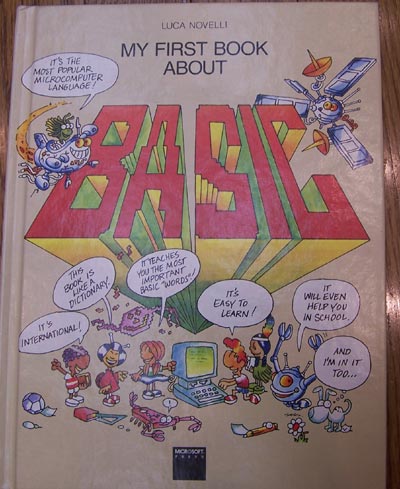
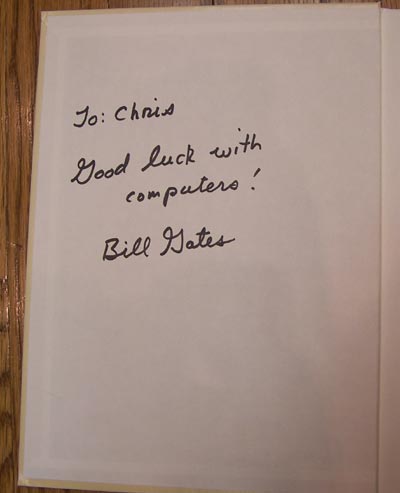
I went back to my hometown, Kansas City, for a presentation. I stayed at my parents house and found a book called, “My first book about Basic”. Bill Gates signed the inside of the front cover. My mom tells me that I was in second grade when he signed it. Pretty cool.

myfirstbookaboutbasic.jpg

billgsignature.jpg

Legal concerns with public neighborhood websites

Peters & Freedman, LLP is a legal firm that specializes in Community Association law in California. They have a detailed post on their blog of “do’s” and “don’ts” from a legal perspective when it comes to publishing association documents and other information on your neighborhood website.

I generally agree with what they have to say. Here is a quick summary of their do’s and don’ts:

Do’s

  1. Require that residents sign in to access private neighborhood documents.
  2. Post CC&Rs, Bylaws, Rules and Regulations, Architectural Guidelines.
  3. Post a strong privacy policy (See our Privacy Policy.)
  4. Publish a disclaimer for any information posted on the website (See our Disclaimer.)
  5. Seek written permission when publishing photos of homes or residents.

Don’ts

  1. Don’t assume that you have met your legal notification requirements when you post information on the website.
  2. Don’t post non-privileged vendor contracts, membership lists, reserve account balances, financial statements, and other specified financial documents.
  3. Don’t provide chat room or discussion forums

#3 in the don’ts list is the only thing that I disagree with. I understand the concern, I just don’t agree with the proposed solution.

The legal concern is that online discussions will become inflammatory or defamatory or contain offensive language, which may have legal implications.

However, the reality of the situation is that residents demand the ability to have online discussion. In fact, they even get upset if we limit this capability. (See my post on suggestions from our users.)

Instead of removing the capability to have an online discussion, I would suggest that the website implement the proper controls that influence appropriate behavior.

For example, in order to post information on an eNeighbors website, you must agree to disclose who you are. You cannot hide behind an avatar or alias that hides you. So, when you post information, your name is attached to it, forcing you to think twice about what you say online. We have also provided other users with the ability to flag content as inappropriate. If you see a post that contains something negative, all you have to do is click a link and we’re immediately notified to remove the post. And finally, you can also review information before it is posted – that way nothing inappropriate ever makes its way on the website.

All in all, I think the best way to put any legal concerns to bed is to simply make your neighborhood website private. Through our registration process, eNeighbors can ensure that only residents are allowed access.

TownKings: Location-based social networking

TownKings is an interesting concept. (TownQueens is the sister site for women.) They both look like they’re geared toward dating, but they also attempt to connect you to local parties and information about your friends.

My only concern with sites like TownKings and FatDoor is privacy.

I’ve registered on the site to test it out. Feel free to send me a friend request. You can find me by my username, cstock. So far, I’m the only guy who’s joined in my area.

Mosh, Yahoo’s new social network?

TechCrunch is reporting that Yahoo! is working on a new social network called “Mosh”. I actually like the name. I assume that it makes reference to moshing.

It’ll be interesting to see if they tie local into the mix. Right now, there isn’t any information to suggest that they are, but local and social is a big focus for them this year. Or at least it was before Terry left.

Email Etiquette

Reply All and Other Email Gaffes” is a good article for anyone who sends email. I send an average of 50 emails per day and I see all the mistakes that people make when emailing. (Don’t tell anyone, but I even learned a few things myself from this article.)

I would highly recommend this for our board members or other neighborhood leaders who have to deal with community feedback and other email that is public. Often times, as a board member, you have to handle upset or even irate residents that aren’t so kind on email. My advice is to keep your cool, even when they aren’t. It’s so easy to read emotion into an email and want to respond or “flame” that person back. But when you do, it always turns into a bad situation. The article says it best, “e-mail is not the place to make negative comments.”

The only thing in the article that I disagree with is the “Poor editing” rule. Typo’s are a way of life online. Everything is published so quickly, and the message is rarely lost because of a misspelling or two. I’ve emailed with CEO’s who refuse to use capital letters in their email. (Not sure how that’s possible when Outlook automatically does it for you in most cases. Maybe they’re not using Outlook.) On the other hand, when you’re applying for a job or want to leave an impression, you might just give that email another look.